


The digitization of meter management means that meter-related tasks—reporting meter readings, meter replacement, calibration inspections, and network requests—are handled in a single workflow instead of relying on paper and manual record-keeping. BürOffice provides a ready-made solution for this: it logs every request, places it in the appropriate workflow, and assigns everything from reports to response letters to the specific case. The administrator can see the service location, meter data, previous replacements, and all correspondence on a single screen. This page demonstrates how the digitization of meter management works in practice.
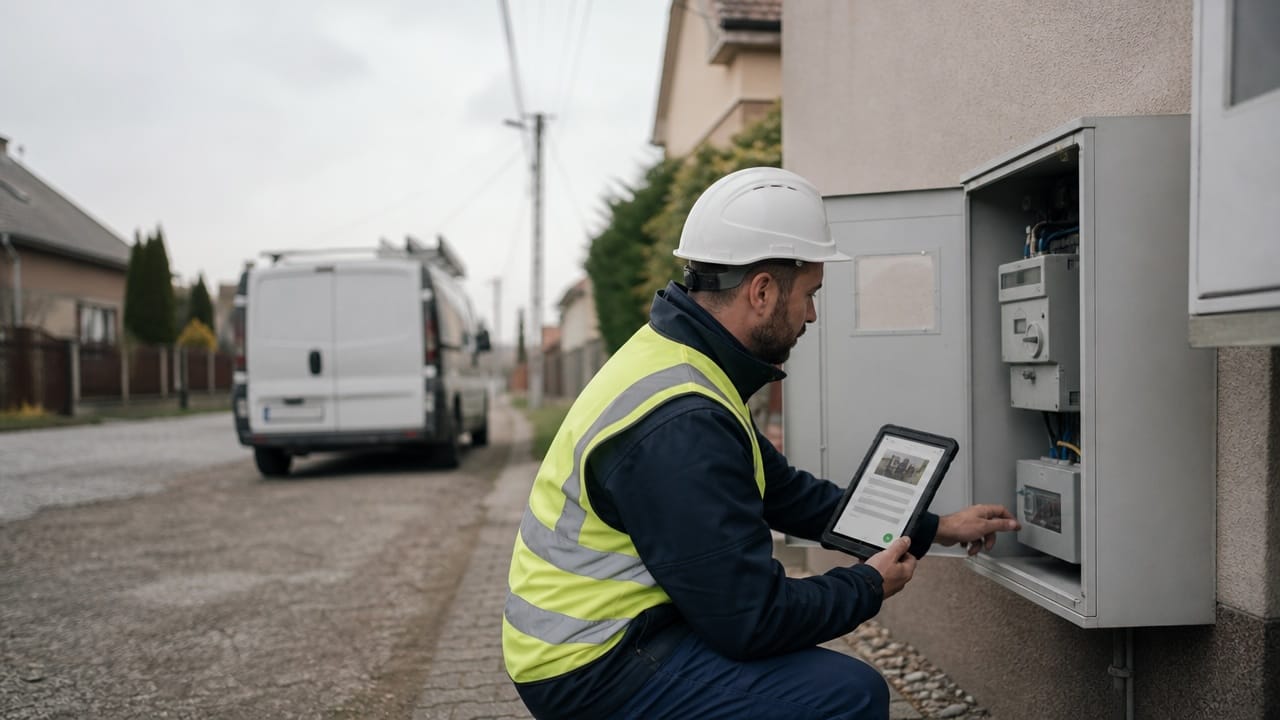
The technician writes a paper report on the meter replacement on-site. The report arrives days later; someone scans it, someone else enters the data into the technical system—and by the third transcription, a digit slips out of place in the final meter reading. A disputed bill arrives, the customer files a complaint, and the customer service representative searches for the report: the scanned copy is in a network folder, the original is in a box, and the photo is on the technician’s phone. Days are wasted on what could be done with a single click. Meanwhile, network requests—new connections, capacity upgrades—travel back and forth via email and on paper between the technical department, customer service, and the legal department. The customer hears nothing for weeks, so they call. Often. And all of this is carried out by subcontracted repair companies, whose performance the service provider only learns about afterward, from paperwork. No one knows exactly which company completed how many replacements by the deadline.
The meter reading submission process in BürOffice is channel-independent: submissions received via the customer portal, email, phone, or mail all go to the same place and are automatically assigned to the consumption location. The rules engine filters out abnormal or incomplete readings and places them in a separate workflow for human review—the rest proceed to billing. The agent only handles cases that actually require a decision. This way, peak periods during meter reading season don’t overwhelm the team: automated processing handles the volume, while humans handle the exceptions. There will also be fewer billing disputes, because the data is recorded once—right where it’s generated. The digitization of meter reading administration delivers the first, immediately noticeable result here: the time it takes to process dictations is reduced to a matter of hours, and errors from manual recording disappear from the bills.
Once the technician’s report is scanned or uploaded via mobile device, it is immediately added to the consumption site’s file, along with the data from the old and new meters. The original paper copy is replaced by a barcode-based archival record—which can be retrieved in seconds in the event of a dispute. The system also tracks the verification and calibration deadlines for the meters and initiates the replacement process in a timely manner. Meter management thus no longer depends on calendar entries: the list of upcoming replacements is compiled automatically, and notification letters are generated from templates. This works just as well for large-scale replacement campaigns: the system schedules the addresses, generates the notification letters, and tracks where replacements were successful and where a new appointment is needed. The status of the campaign is displayed on a single screen, not across ten spreadsheets.
The tricky part of a meter replacement is gaining access. The system generates appointment notifications from a template, either via a return receipt or electronic confirmation, and the technician records any failed access attempts on-site—with a photo and the time. Should a dispute later arise over whether the service provider attempted the replacement, the entire chain of notifications and attempts is available in documented form. This way, the handling of consumer issues is not a matter of one person’s word against another’s—but of documentation.
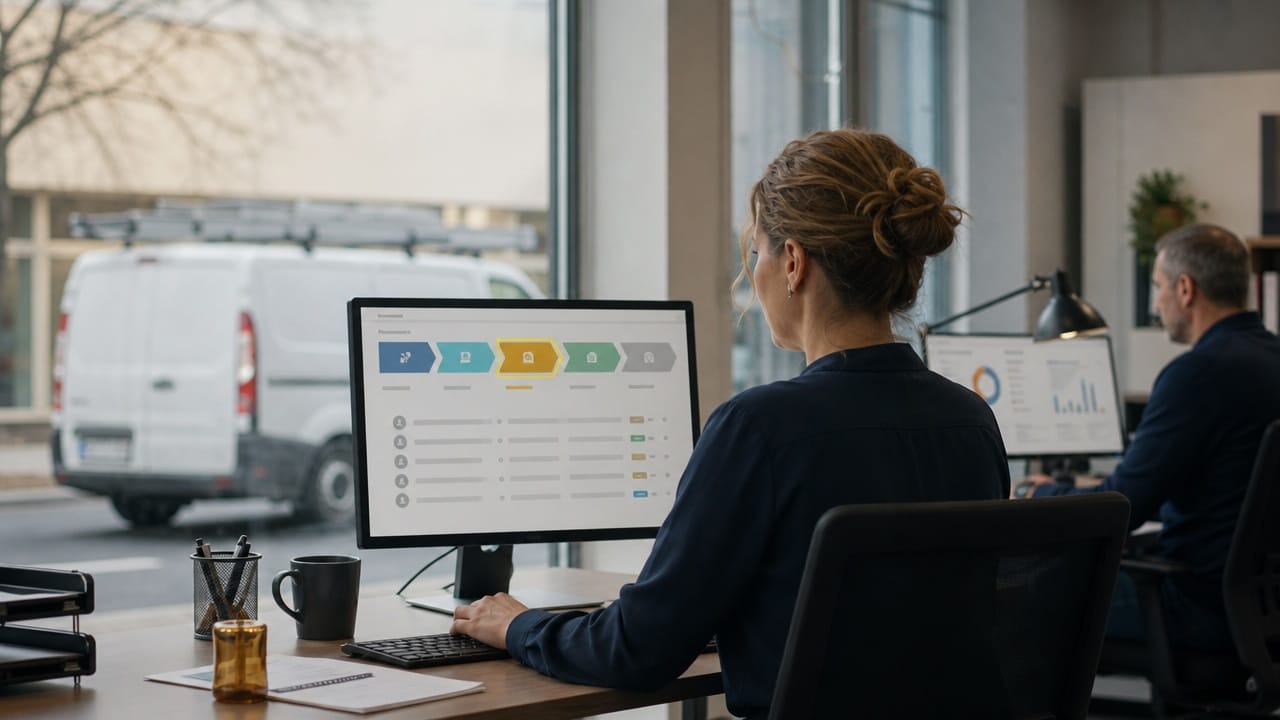
When a new connection or capacity expansion request is received, it enters a workflow: technical assessment, quote, contract, implementation—each step has a designated person in charge and a deadline. The greatest benefit of automating network administration is that the status of each case is visible to everyone. When a customer calls, customer service does not transfer the call but answers it directly: they can see that the case is currently at the technical approval stage and when the next step is expected.
If no one responds in time at any step, the system escalates the issue. The case does not stall due to a vacation or a subcontractor’s delay—at most, it becomes clear where the process stands.
The BürOffice data source connector integrates with the technical records system and the billing system via REST APIs, web services, AI interfaces, SQL queries, and other connectors. Metering data is recorded once and remains consistent across all systems—thereby eliminating one of the main causes of disputed invoices: data entry errors. Subcontractor service providers can also be involved: they view their tasks with their own set of permissions and upload their reports, while the service provider monitors their progress in real time. Meter administration data also appears in the 360-degree customer view: during a call, customer service representatives can see the last meter reading, the status of the replacement, and any open network issues.
The control panel shows how many replacements are due, how many cases are pending, and where network demand is concentrated. Subcontractor performance can also be measured: which company completed how many tasks by the deadline. Digitizing meter reading operations thus extends the transparency already available in the office to field workers as well.
Yes. BürOffice is built around the technical and billing systems through integration—the existing system remains the data source.
The first type of case—typically meter reading submission or meter replacement—goes live within a few weeks; the others can be scheduled thereafter. The pilot program begins with the highest-volume case type so that results are immediately visible.
Not necessarily. The minutes can be processed even if they are scanned, but by uploading them via a mobile device, the paper version can be completely eliminated.
Yes. The system schedules the emails, generates notifications, tracks successful and unsuccessful attempts, and displays the campaign status in real time.
Digitizing meter management pays off the fastest where there is currently the most paperwork and data entry—and that’s exactly the case with meters. Request a free consultation: In one hour, we’ll review your meter management processes and show you where you can save the most time.

Lower costs.
Transparent operation.
Excellent CX.