


A contract is waiting to be signed in the conference room, there’s a line in front of the printer, and they’re just bringing up the third box from the file room. Meanwhile, every executive presentation includes the slide: “digital operations.” For most companies, the paperless office is stuck right here—there’s the intention, but no system. BürOffice bridges this gap: for them, the paperless office isn’t just a slogan, but four interconnected capabilities that eliminate paper from processes—from incoming mail to outgoing correspondence. We’ll walk through what it takes, where projects tend to stall, and how to manage the transition until paper disappears entirely.
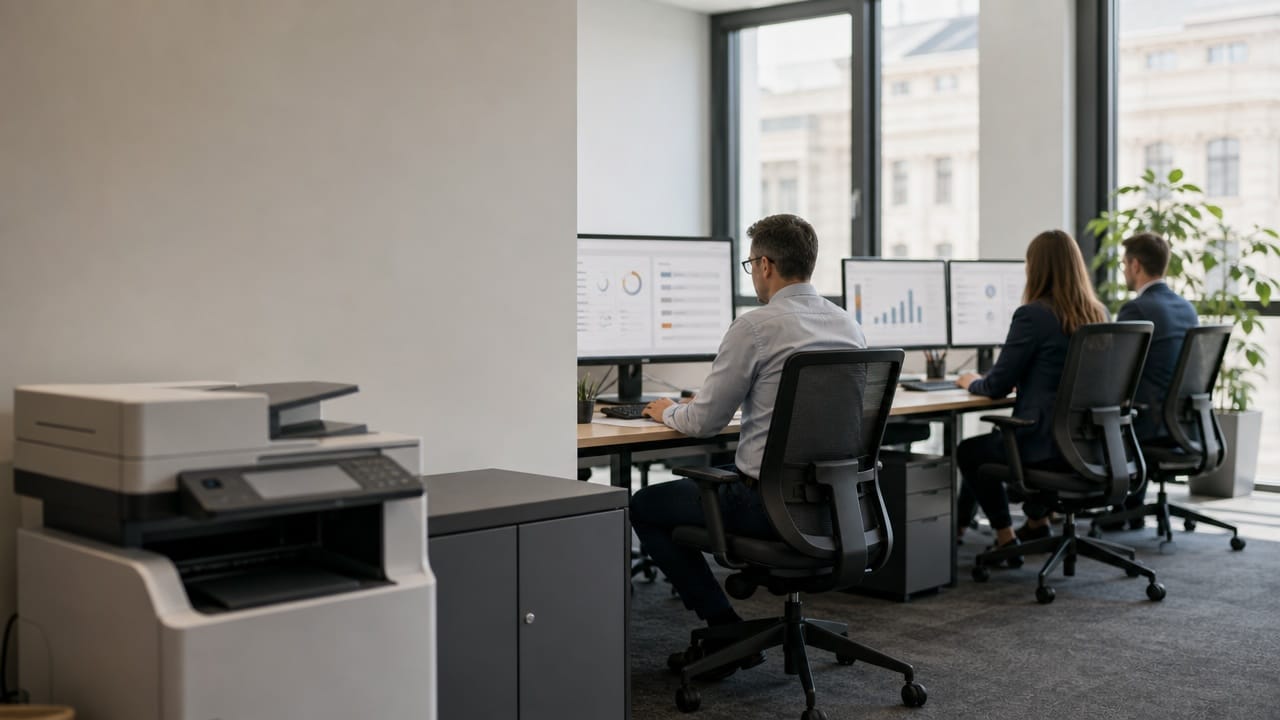
A paperless office doesn’t mean that printing is banned starting tomorrow. It means that processes run digitally by default: a document is created digitally, circulates digitally for approval, receives a digital signature, and is sent out via electronic channels. Paper is used only where required by law or by a business partner. The difference is striking. The “we scan everything” approach merely produces digital copies—the work remains manual. In a truly paperless operation, the digital document carries with it the task, the deadline, and the person responsible.
There are three typical reasons. The first: only one stage of the process is digitized—for example, they implement an e-signature, but approvals continue to circulate via email, and outgoing letters end up being printed. Second: incoming paper documents aren’t processed, so manual data entry is always required at the beginning of the digital workflow. Third: the old paper archives aren’t touched, so employees end up searching in two parallel worlds. The lesson: a paperless office is a chain, and the chain breaks at its weakest link.
The BürOffice Input subsystem attaches postal mail to the system immediately after scanning, along with a unique identifier and complete receipt data. Emails, uploads via the customer portal, and documents received through Cégkapu and Hivatali Kapu are automatically processed. Paper documents are digitized at the building’s entrance—from that point on, the process no longer depends on them.
The system automatically applies the appropriate digital signature to the approved document. Multiple signature providers are supported, and both group and individual signatures can be handled. The “print–sign–scan back” cycle is eliminated, while legal validity is maintained.
The Output subsystem routes outgoing communications to electronic channels: email, Cégkapu, Hivatali Kapu, and the customer portal. The system determines the delivery method based on the customer’s settings and previous communications. By utilizing electronic channels, the company uses up to 40% less paper—and any paper-based communications are handled through a regulated, trackable process.
The process ends at the archive. The system preserves the documents in the digital repository through certified archiving in accordance with eIDAS and domestic laws—their evidentiary value is maintained for decades, and the timestamps can be automatically updated. No more rummaging through boxes in the basement: searches take only seconds.
In our experience, there are two areas. The first is bulk outgoing communication: notifications, bulletins, and contract amendments. BürOffice generates documents from templates with automatic data filling; the manager approves documents created using the same template in bulk, and distribution takes place electronically according to the client’s settings or—where necessary—via centralized printing. The mailing list is generated electronically, and the system automatically processes return receipts. The second area is approval processes: contracts, invoices, and internal authorizations. Here, replacing paper not only saves on printing costs but also saves days—at the financial services provider, contract processing time has been reduced from 7–10 days to 1–2 days, thanks to digital signatures and a paperless workflow.
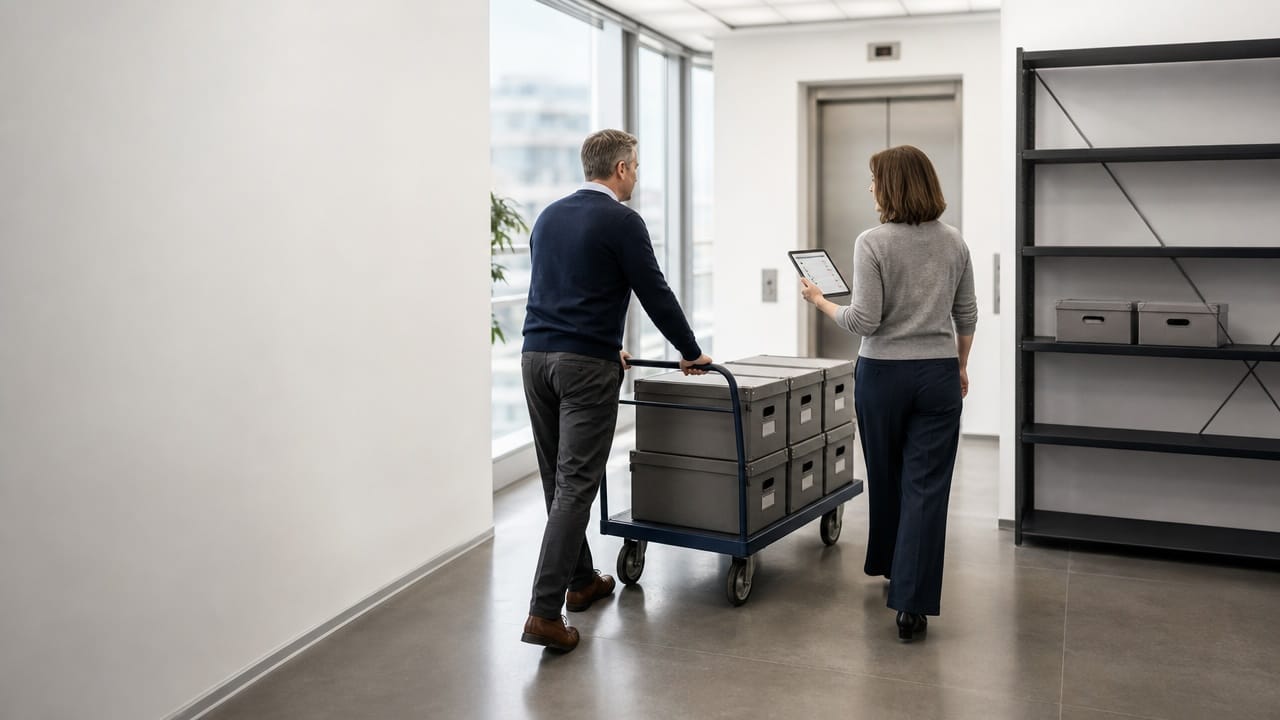
For large companies, the transition to a paperless office never happens overnight—original documents, old cases, and legal retention requirements all play a role in the transition. That’s why BürOffice keeps even the remaining paper documents organized: the archive inventory accurately shows where each document is located, barcode technology tracks its movement, and requests, transfers, and disposal all take place through a regulated process. This way, colleagues search in a single place: the system tells them whether the document opens digitally or which shelf it is on. The two worlds do not mix; instead, they coexist within a single record.
Going paperless stands or falls on the cooperation of our colleagues, and we have good news in this regard. The system doesn’t take away their jobs—it takes away the most frustrating parts of their work: the printer, the lugging around of papers, the waiting for signatures, and the endless “where’s that piece of paper?” rounds. In the digital process, the task automatically appears in the inbox, along with all its history. Plus, permission-protected remote access opens the door to flexible work: working from home isn’t held up because a document was left at the office.
A paperless office is ultimately a leadership issue: it doesn’t depend on technology, but on the decision to make digital the default for processes. As you’ve seen above, the technology is ready.
You don’t have to scan everything retroactively. Frequently used files can be digitized, while the rest can be tracked using barcode-based records—the system keeps track of both in one place.
Yes. Supported electronic signatures ensure legal validity, and secure archiving preserves their evidentiary value over the long term—even before government agencies and courts.
Processes can be migrated in phases: first the area with the highest paper volume, then the rest. BürOffice integrates with existing scanners and mail systems, so the first area can become paperless in as little as a few weeks.
And if you need measurable data for your sustainability report: the reduction in paper usage can be quantified by the system—it’s not an estimate.
Select the process with the highest paper volume and request a demo: we’ll show you how it would work without paper in BürOffice, from receipt to archiving. The paperless office isn’t just a vision for the future—it’s a decision you can make, a process you can launch, and results you can measure in a matter of weeks.

Lower costs.
Transparent operation.
Excellent CX.